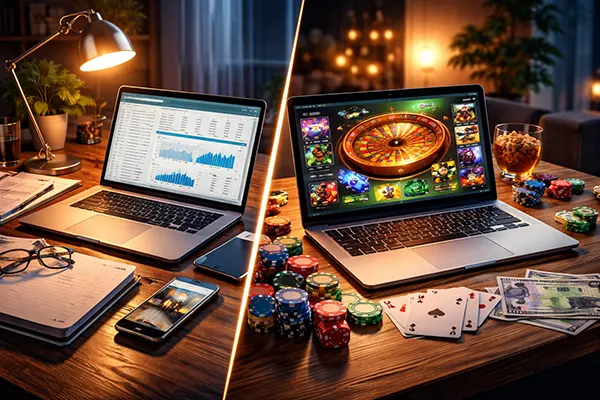
Evening Remote Work and Casino Leisure: How to Separate Job Stress from Gaming Decisions
Evening remote work has become routine across the UK and Europe by 2026. Freelancers, IT specialists, customer support agents and online entrepreneurs often finish tasks late at night. At the same time, online casino gaming is often used as a way to unwind after work. The difficulty begins when professional stress quietly influences gaming behaviour. Fatigue, unfinished emails and financial concerns can distort judgement. To avoid impulsive decisions, it is essential to create a clear boundary between working hours and leisure play, especially when real money is involved.
Why Evening Work Changes the Way We Make Decisions
Cognitive research confirms that decision quality declines after prolonged mental effort. By late evening, self-control resources are significantly reduced. When a remote worker spends six to eight hours solving complex tasks, the brain naturally seeks quick relief. This condition increases sensitivity to risk and emotional choices, including raising stakes or attempting to recover previous losses.
Stress hormones also affect impulse regulation. If a project deadline has just passed or a client issue remains unresolved, emotional tension may carry over into leisure time. Choosing a structured online casino environment, including Way casino, where games are clearly categorised and responsible play tools are integrated, can feel convenient when approached with a calm mindset. Even with an organised interface, balanced decisions still depend on mental recovery rather than impulse.
Screen saturation is another overlooked factor. Remote professionals already spend most of their day in a digital workspace. Moving directly from spreadsheets or code to casino interfaces keeps the nervous system in the same stimulation cycle, reducing the ability to detach from work-related pressure.
Warning Signs That Work Stress Is Affecting Play
Urgency is usually the first signal. If playing feels necessary rather than optional, stress is likely influencing the decision. Healthy leisure activity should be planned and limited, not reactive.
Emotional spillover is another indicator. Frustration from work discussions or anxiety about income stability may unconsciously affect bet size. Behavioural economics studies show that stressed individuals tend to take greater risks in an attempt to regain emotional balance.
Ignoring preset limits is a serious warning sign. By 2026, regulated operators provide deposit caps, session reminders and affordability checks. If a player attempts to override personal budgeting rules, gaming is no longer serving as relaxation but as a stress outlet.

Practical Strategies to Separate Work and Casino Time
Introduce a transition ritual. A 30–60 minute buffer between finishing work and starting any gaming session allows cortisol levels to stabilise. Physical movement, breathing exercises or a short outdoor walk can significantly improve decision clarity.
Maintain financial separation. Keep professional income distinct from entertainment funds. Allocate a fixed monthly leisure budget in advance instead of deciding on deposits after a demanding working day. This approach prevents emotional spending.
Define strict time boundaries. Evening gaming can be part of a controlled routine, but session length should be determined before logging in. Reality checks and automated reminders available at licensed casinos in 2026 are useful tools when activated deliberately.
Building a Healthier Evening Routine
Balance digital leisure with offline recovery. Reading, stretching or preparing a meal before gaming reduces overstimulation and helps the mind shift from performance mode to relaxation mode.
Evaluate personal motivation honestly. If the intention is entertainment within a defined budget, the activity remains recreational. If the aim is to escape stress, alternative coping mechanisms should be considered first.
Remote work and online casino gaming can coexist without conflict when boundaries are clearly defined. Calm decision-making, pre-set financial limits and structured downtime are the foundations of responsible evening play in 2026.